
at home / 05
start with one corner.
Choose a drawer, a shelf or the place where laundry gathers. A useful storage plan starts with what needs to live there.
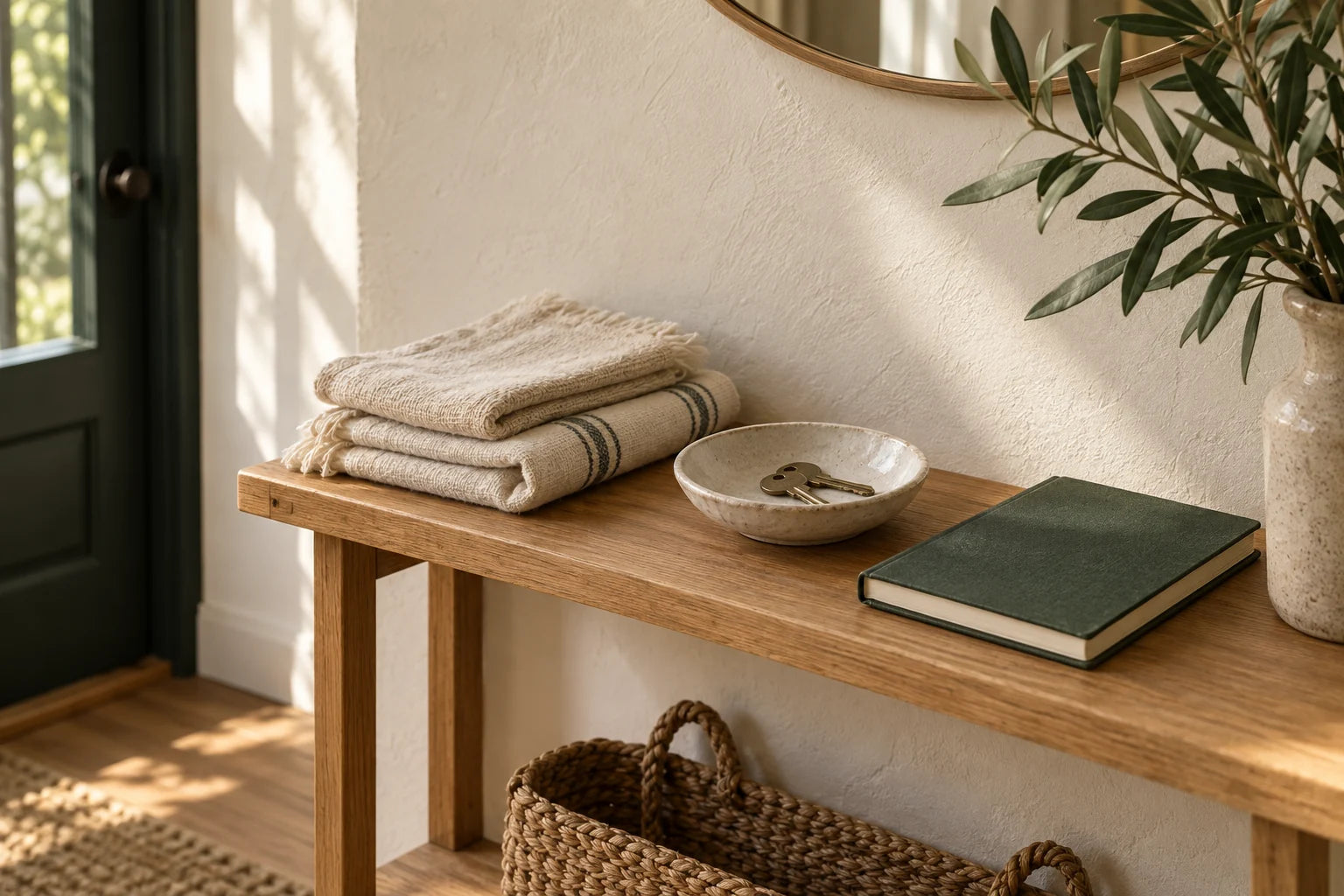
Choose a space you can finish.
Empty one area and sort its contents by how you use them. Return things that belong elsewhere. Set aside items you no longer need before deciding what storage to add.
Group the remaining items and place them back temporarily. This lets you see the size and shape of the storage gap, rather than choosing a container first and filling it later.
Measure the part you can use
A drawer
Measure the inside width, depth and clearance below the top. Check whether the drawer still closes with the proposed organizer filled.
A shelf
Check the usable shelf area and vertical clearance. Leave space to grip a container and remove it without shifting everything beside it.
A floor corner
Measure the footprint and height available. Allow for doors, walking space and how the item opens. Check any product-specific placement instructions.
for the laundry corner
Think about the route, too.
A laundry container needs a place to stand and a workable route to the place you empty it. Check its dimensions and handling instructions. Do not infer load capacity from height or appearance.
For a folding design, compare its open and stored dimensions when provided. Make sure the selected option is the size you measured for.
Three questions before you keep the layout
Can I reach it?
Put frequently used things where you can retrieve them easily, with heavier items placed according to the furniture and container instructions.
Can I put it back?
Test the return step. A tidy arrangement that takes several moves to restore may be difficult to maintain.
Can the space still do its job?
Close the drawer, open nearby doors and check your walking route. Storage should leave the everyday function of the space intact.